In computer science, static program analysis (also known as static analysis or static simulation) is the analysis of computer programs performed without executing them, in contrast with dynamic program analysis, which is performed on programs during their execution in the integrated environment. The term is usually applied to analysis performed by an automated tool, with human analysis typically being called "program understanding", program comprehension, or code review. In the last of these, software inspection and software walkthroughs are also used. In most cases the analysis is performed on some version of a program's source code, and, in other cases, on some form of its object code. Two leading approaches to resource certification have been Static Analysis (SA) and Implicit Computational Complexity (ICC). SA is algorithmic in nature: it focuses on a broad programming language of choice, and seeks to determine by syntactic means whether given programs in that language are feasible. In contrast, ICC attempts to create from the outset specialized programming languages or methods that delineate a complexity class. Thus, SA's focus is on compile time, making no demand on the programmer; whereas ICC is a language-design discipline." The discipline of static analysis should not be confused with linting, which is the process of checking for coding style mistakes. == Rationale == The sophistication of the analysis performed by tools varies from those that only consider the behaviour of individual statements and declarations, to those that include the complete source code of a program in their analysis. The uses of the information obtained from the analysis vary from highlighting possible coding errors (e.g., the lint tool) to formal methods that mathematically prove properties about a given program (e.g., its behaviour matches that of its specification). Software metrics and reverse engineering can be described as forms of static analysis. Deriving software metrics and static analysis are increasingly deployed together, especially in creation of embedded systems, by defining so-called software quality objectives. A growing commercial use of static analysis is in the verification of properties of software used in safety-critical computer systems and locating potentially vulnerable code. For example, the following industries have identified the use of static code analysis as a means of improving the quality of increasingly sophisticated and complex software: Medical software: The US Food and Drug Administration (FDA) has identified the use of static analysis for medical devices. Nuclear software: In the UK the Office for Nuclear Regulation (ONR) recommends the use of static analysis on reactor protection systems. Aviation software (in combination with dynamic analysis). Automotive & Machines (functional safety features form an integral part of each automotive product development phase, ISO 26262, section 8). A study in 2012 by VDC Research reported that 28.7% of the embedded software engineers surveyed use static analysis tools and 39.7% expect to use them within 2 years. A study from 2010 found that 60% of the interviewed developers in European research projects made at least use of their basic IDE built-in static analyzers. However, only about 10% employed an additional other (and perhaps more advanced) analysis tool. In the application security industry the name static application security testing (SAST) is also used. SAST is an important part of Security Development Lifecycles (SDLs) such as the SDL defined by Microsoft and a common practice in software companies. == Tool types == The OMG (Object Management Group) published a study regarding the types of software analysis required for software quality measurement and assessment. This document on "How to Deliver Resilient, Secure, Efficient, and Easily Changed IT Systems in Line with CISQ Recommendations" describes three levels of software analysis. Unit Level Analysis that takes place within a specific program or subroutine, without connecting to the context of that program. Technology Level Analysis that takes into account interactions between unit programs to get a more holistic and semantic view of the overall program in order to find issues and avoid obvious false positives. System Level Analysis that takes into account the interactions between unit programs, but without being limited to one specific technology or programming language. A further level of software analysis can be defined. Mission/Business Level Analysis that takes into account the business/mission layer terms, rules and processes that are implemented within the software system for its operation as part of enterprise or program/mission layer activities. These elements are implemented without being limited to one specific technology or programming language and in many cases are distributed across multiple languages, but are statically extracted and analyzed for system understanding for mission assurance. == Formal methods == Formal methods is the term applied to the analysis of software (and computer hardware) whose results are obtained purely through the use of rigorous mathematical methods. The mathematical techniques used include denotational semantics, axiomatic semantics, operational semantics, and abstract interpretation. By a straightforward reduction to the halting problem, it is possible to prove that (for any Turing complete language), finding all possible run-time errors in an arbitrary program (or more generally any kind of violation of a specification on the final result of a program) is undecidable: there is no mechanical method that can always answer truthfully whether an arbitrary program may or may not exhibit runtime errors. This result dates from the works of Church, Gödel and Turing in the 1930s (see: Halting problem and Rice's theorem). As with many undecidable questions, one can still attempt to give useful approximate solutions. Some of the implementation techniques of formal static analysis include: Abstract interpretation, to model the effect that every statement has on the state of an abstract machine (i.e., it 'executes' the software based on the mathematical properties of each statement and declaration). This abstract machine over-approximates the behaviours of the system: the abstract system is thus made simpler to analyze, at the expense of incompleteness (not every property true of the original system is true of the abstract system). If properly done, though, abstract interpretation is sound (every property true of the abstract system can be mapped to a true property of the original system). Data-flow analysis, a lattice-based technique for gathering information about the possible set of values; Hoare logic, a formal system with a set of logical rules for reasoning rigorously about the correctness of computer programs. There is tool support for some programming languages (e.g., the SPARK programming language (a subset of Ada) and the Java Modeling Language—JML—using ESC/Java and ESC/Java2, Frama-C WP (weakest precondition) plugin for the C language extended with ACSL (ANSI/ISO C Specification Language) ). Model checking, considers systems that have finite state or may be reduced to finite state by abstraction; Symbolic execution, as used to derive mathematical expressions representing the value of mutated variables at particular points in the code. Nullable reference analysis == Data-driven static analysis == Data-driven static analysis leverages extensive codebases to infer coding rules and improve the accuracy of the analysis. For instance, one can use all Java open-source packages available on GitHub to learn good analysis strategies. The rule inference can use machine learning techniques. It is also possible to learn from a large amount of past fixes and warnings. == Remediation == Static analyzers produce warnings. For certain types of warnings, it is possible to design and implement automated remediation techniques. For example, Logozzo and Ball have proposed automated remediations for C# cccheck.
Watch Duty
Watch Duty is real-time wildfire tracking and alert platform. It utilizes a combination of official data sources and human monitoring by experienced volunteers, including active and retired firefighters, dispatchers, and first responders. The service is operated by Sherwood Forestry Service, a 501(c)(3) non-profit organization. In 2025, Watch Duty had 48 full-time employees and approximately 250 volunteers who reported on over 13,000 wildfires. == History == Watch Duty was launched in August 2021 by John Mills, who experienced a wildfire shortly after he moved to Sonoma County, California. The California Department of Forestry and Fire Protection (CAL FIRE) was unable to provide updates more than once a day due to time constraints, and residents of the area were unable to monitor the progression of the wildfire. Mills discovered that updates were being shared on social media by volunteers following radio scanners, and developed the Watch Duty app to make the information more readily available. It launched with a volunteer staff of "citizen information officers," initially serving Sonoma County before expanding to all of California in June 2022. As of December 2024, the service covered 22 states west of the Mississippi River. During the January 2025 Southern California wildfires, Watch Duty was downloaded millions of times, ranking among the most popular free downloads on the iOS App Store. On December 1st, 2025, Watch Duty announced an expansion to all 50 U.S. states. == App == The application is centered around an interactive map based on OpenStreetMap data with a variety of overlays visualizing fire risk, active fires and evacuation zones, weather conditions, and air quality observations. Watch Duty sources wildfire information from radio scanner transmissions, firefighters, sheriffs, and CAL FIRE publications. It has policies against the publication of personally identifiable information, such as the names of fire victims. Watch Duty is free to use, doesn't require users to sign up, and doesn't display ads.
Margin classifier
In machine learning (ML), a margin classifier is a type of classification model which is able to give an associated distance from the decision boundary for each data sample. For instance, if a linear classifier is used, the distance (typically Euclidean, though others may be used) of a sample from the separating hyperplane is the margin of that sample. The notion of margins is important in several ML classification algorithms, as it can be used to bound the generalization error of these classifiers. These bounds are frequently shown using the VC dimension. The generalization error bound in boosting algorithms and support vector machines is particularly prominent. == Margin for boosting algorithms == The margin for an iterative boosting algorithm given a dataset with two classes can be defined as follows: the classifier is given a sample pair ( x , y ) {\displaystyle (x,y)} , where x ∈ X {\displaystyle x\in X} is a domain space and y ∈ Y = { − 1 , + 1 } {\displaystyle y\in Y=\{-1,+1\}} is the sample's label. The algorithm then selects a classifier h j ∈ C {\displaystyle h_{j}\in C} at each iteration j {\displaystyle j} where C {\displaystyle C} is a space of possible classifiers that predict real values. This hypothesis is then weighted by α j ∈ R {\displaystyle \alpha _{j}\in R} as selected by the boosting algorithm. At iteration t {\displaystyle t} , the margin of a sample x {\displaystyle x} can thus be defined as y ∑ j t α j h j ( x ) ∑ | α j | . {\displaystyle {\frac {y\sum _{j}^{t}\alpha _{j}h_{j}(x)}{\sum |\alpha _{j}|}}.} By this definition, the margin is positive if the sample is labeled correctly, or negative if the sample is labeled incorrectly. This definition may be modified and is not the only way to define the margin for boosting algorithms. However, there are reasons why this definition may be appealing. == Examples of margin-based algorithms == Many classifiers can give an associated margin for each sample. However, only some classifiers utilize information of the margin while learning from a dataset. Many boosting algorithms rely on the notion of a margin to assign weight to samples. If a convex loss is utilized (as in AdaBoost or LogitBoost, for instance) then a sample with a higher margin will receive less (or equal) weight than a sample with a lower margin. This leads the boosting algorithm to focus weight on low-margin samples. In non-convex algorithms (e.g., BrownBoost), the margin still dictates the weighting of a sample, though the weighting is non-monotone with respect to the margin. == Generalization error bounds == One theoretical motivation behind margin classifiers is that their generalization error may be bound by the algorithm parameters and a margin term. An example of such a bound is for the AdaBoost algorithm. Let S {\displaystyle S} be a set of m {\displaystyle m} data points, sampled independently at random from a distribution D {\displaystyle D} . Assume the VC-dimension of the underlying base classifier is d {\displaystyle d} and m ≥ d ≥ 1 {\displaystyle m\geq d\geq 1} . Then, with probability 1 − δ {\displaystyle 1-\delta } , we have the bound: P D ( y ∑ j t α j h j ( x ) ∑ | α j | ≤ 0 ) ≤ P S ( y ∑ j t α j h j ( x ) ∑ | α j | ≤ θ ) + O ( 1 m d log 2 ( m / d ) / θ 2 + log ( 1 / δ ) ) {\displaystyle P_{D}\left({\frac {y\sum _{j}^{t}\alpha _{j}h_{j}(x)}{\sum |\alpha _{j}|}}\leq 0\right)\leq P_{S}\left({\frac {y\sum _{j}^{t}\alpha _{j}h_{j}(x)}{\sum |\alpha _{j}|}}\leq \theta \right)+O\left({\frac {1}{\sqrt {m}}}{\sqrt {d\log ^{2}(m/d)/\theta ^{2}+\log(1/\delta )}}\right)} for all θ > 0 {\displaystyle \theta >0} .
Latent Dirichlet allocation
In natural language processing, latent Dirichlet allocation (LDA) is a generative statistical model that explains how a collection of text documents can be described by a set of unobserved "topics." For example, given a set of news articles, LDA might discover that one topic is characterized by words like "president", "government", and "election", while another is characterized by "team", "game", and "score". It is one of the most common topic models. The LDA model was first presented as a graphical model for population genetics by J. K. Pritchard, M. Stephens and P. Donnelly in 2000. The model was subsequently applied to machine learning by David Blei, Andrew Ng, and Michael I. Jordan in 2003. Although its most frequent application is in modeling text corpora, it has also been used for other problems, such as in clinical psychology, social science, and computational musicology. The core assumption of LDA is that documents are represented as a random mixture of latent topics, and each topic is characterized by a probability distribution over words. The model is a generalization of probabilistic latent semantic analysis (pLSA), differing primarily in that LDA treats the topic mixture as a Dirichlet prior, leading to more reasonable mixtures and less susceptibility to overfitting. Learning the latent topics and their associated probabilities from a corpus is typically done using Bayesian inference, often with methods like Gibbs sampling or variational Bayes. == History == In the context of population genetics, LDA was proposed by J. K. Pritchard, M. Stephens and P. Donnelly in 2000. LDA was applied in machine learning by David Blei, Andrew Ng and Michael I. Jordan in 2003. == Overview == === Population genetics === In population genetics, the model is used to detect the presence of structured genetic variation in a group of individuals. The model assumes that alleles carried by individuals under study have origin in various extant or past populations. The model and various inference algorithms allow scientists to estimate the allele frequencies in those source populations and the origin of alleles carried by individuals under study. The source populations can be interpreted ex-post in terms of various evolutionary scenarios. In association studies, detecting the presence of genetic structure is considered a necessary preliminary step to avoid confounding. === Clinical psychology, mental health, and social science === In clinical psychology research, LDA has been used to identify common themes of self-images experienced by young people in social situations. Other social scientists have used LDA to examine large sets of topical data from discussions on social media (e.g., tweets about prescription drugs). Additionally, supervised Latent Dirichlet Allocation with covariates (SLDAX) has been specifically developed to combine latent topics identified in texts with other manifest variables. This approach allows for the integration of text data as predictors in statistical regression analyses, improving the accuracy of mental health predictions. One of the main advantages of SLDAX over traditional two-stage approaches is its ability to avoid biased estimates and incorrect standard errors, allowing for a more accurate analysis of psychological texts. In the field of social sciences, LDA has proven to be useful for analyzing large datasets, such as social media discussions. For instance, researchers have used LDA to investigate tweets discussing socially relevant topics, like the use of prescription drugs and cultural differences in China. By analyzing these large text corpora, it is possible to uncover patterns and themes that might otherwise go unnoticed, offering valuable insights into public discourse and perception in real time. === Musicology === In the context of computational musicology, LDA has been used to discover tonal structures in different corpora. === Machine learning === One application of LDA in machine learning – specifically, topic discovery, a subproblem in natural language processing – is to discover topics in a collection of documents, and then automatically classify any individual document within the collection in terms of how "relevant" it is to each of the discovered topics. A topic is considered to be a set of terms (i.e., individual words or phrases) that, taken together, suggest a shared theme. For example, in a document collection related to pet animals, the terms dog, spaniel, beagle, golden retriever, puppy, bark, and woof would suggest a DOG_related theme, while the terms cat, siamese, Maine coon, tabby, manx, meow, purr, and kitten would suggest a CAT_related theme. There may be many more topics in the collection – e.g., related to diet, grooming, healthcare, behavior, etc. that we do not discuss for simplicity's sake. (Very common, so called stop words in a language – e.g., "the", "an", "that", "are", "is", etc., – would not discriminate between topics and are usually filtered out by pre-processing before LDA is performed. Pre-processing also converts terms to their "root" lexical forms – e.g., "barks", "barking", and "barked" would be converted to "bark".) If the document collection is sufficiently large, LDA will discover such sets of terms (i.e., topics) based upon the co-occurrence of individual terms, though the task of assigning a meaningful label to an individual topic (i.e., that all the terms are DOG_related) is up to the user, and often requires specialized knowledge (e.g., for collection of technical documents). The LDA approach assumes that: The semantic content of a document is composed by combining one or more terms from one or more topics. Certain terms are ambiguous, belonging to more than one topic, with different probability. (For example, the term training can apply to both dogs and cats, but are more likely to refer to dogs, which are used as work animals or participate in obedience or skill competitions.) However, in a document, the accompanying presence of specific neighboring terms (which belong to only one topic) will disambiguate their usage. Most documents will contain only a relatively small number of topics. In the collection, e.g., individual topics will occur with differing frequencies. That is, they have a probability distribution, so that a given document is more likely to contain some topics than others. Within a topic, certain terms will be used much more frequently than others. In other words, the terms within a topic will also have their own probability distribution. When LDA machine learning is employed, both sets of probabilities are computed during the training phase, using Bayesian methods and an expectation–maximization algorithm. LDA is a generalization of older approach of probabilistic latent semantic analysis (pLSA), The pLSA model is equivalent to LDA under a uniform Dirichlet prior distribution. pLSA relies on only the first two assumptions above and does not care about the remainder. While both methods are similar in principle and require the user to specify the number of topics to be discovered before the start of training (as with k-means clustering) LDA has the following advantages over pLSA: LDA yields better disambiguation of words and a more precise assignment of documents to topics. Computing probabilities allows a "generative" process by which a collection of new "synthetic documents" can be generated that would closely reflect the statistical characteristics of the original collection. Unlike LDA, pLSA is vulnerable to overfitting especially when the size of corpus increases. The LDA algorithm is more readily amenable to scaling up for large data sets using the MapReduce approach on a computing cluster. == Model == With plate notation, which is often used to represent probabilistic graphical models (PGMs), the dependencies among the many variables can be captured concisely. The boxes are "plates" representing replicates, which are repeated entities. The outer plate represents documents, while the inner plate represents the repeated word positions in a given document; each position is associated with a choice of topic and word. The variable names are defined as follows: M denotes the number of documents N is number of words in a given document (document i has N i {\displaystyle N_{i}} words) α is the parameter of the Dirichlet prior on the per-document topic distributions β is the parameter of the Dirichlet prior on the per-topic word distribution θ i {\displaystyle \theta _{i}} is the topic distribution for document i φ k {\displaystyle \varphi _{k}} is the word distribution for topic k z i j {\displaystyle z_{ij}} is the topic for the j-th word in document i w i j {\displaystyle w_{ij}} is the specific word. The fact that W is grayed out means that words w i j {\displaystyle w_{ij}} are the only observable variables, and the other variables are latent variables. As proposed in the original paper, a sparse Dirichlet prior can be used to model the to
Constructing skill trees
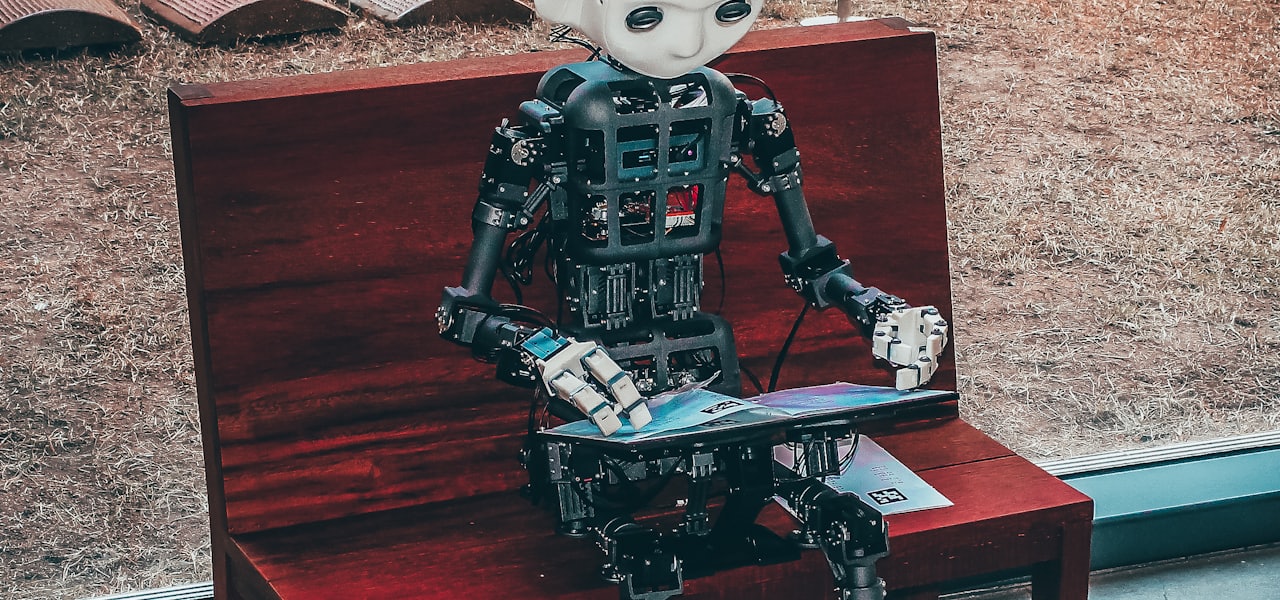
Constructing skill trees (CST) is a hierarchical reinforcement learning algorithm which can build skill trees from a set of sample solution trajectories obtained from demonstration. CST uses an incremental MAP (maximum a posteriori) change point detection algorithm to segment each demonstration trajectory into skills and integrate the results into a skill tree. CST was introduced by George Konidaris, Scott Kuindersma, Andrew Barto and Roderic Grupen in 2010. == Algorithm == CST consists of mainly three parts;change point detection, alignment and merging. The main focus of CST is online change-point detection. The change-point detection algorithm is used to segment data into skills and uses the sum of discounted reward R t {\displaystyle R_{t}} as the target regression variable. Each skill is assigned an appropriate abstraction. A particle filter is used to control the computational complexity of CST. The change point detection algorithm is implemented as follows. The data for times t ∈ T {\displaystyle t\in T} and models Q with prior p ( q ∈ Q ) {\displaystyle p(q\in Q)} are given. The algorithm is assumed to be able to fit a segment from time j + 1 {\displaystyle j+1} to t using model q with the fit probability P ( j , t , q ) {\displaystyle P(j,t,q)_{}^{}} . A linear regression model with Gaussian noise is used to compute P ( j , t , q ) {\displaystyle P(j,t,q)} . The Gaussian noise prior has mean zero, and variance which follows I n v e r s e G a m m a ( v 2 , u 2 ) {\displaystyle \mathrm {InverseGamma} \left({\frac {v}{2}},{\frac {u}{2}}\right)} . The prior for each weight follows N o r m a l ( 0 , σ 2 δ ) {\displaystyle \mathrm {Normal} (0,\sigma ^{2}\delta )} . The fit probability P ( j , t , q ) {\displaystyle P(j,t,q)} is computed by the following equation. P ( j , t , q ) = π − n 2 δ m | ( A + D ) − 1 | 1 2 u v 2 ( y + u ) u + v 2 Γ ( n + v 2 ) Γ ( v 2 ) {\displaystyle P(j,t,q)={\frac {\pi ^{-{\frac {n}{2}}}}{\delta ^{m}}}\left|(A+D)^{-1}\right|^{\frac {1}{2}}{\frac {u^{\frac {v}{2}}}{(y+u)^{\frac {u+v}{2}}}}{\frac {\Gamma ({\frac {n+v}{2}})}{\Gamma ({\frac {v}{2}})}}} Then, CST compute the probability of the changepoint at time j with model q, P t ( j , q ) {\displaystyle P_{t}(j,q)} and P j MAP {\displaystyle P_{j}^{\text{MAP}}} using a Viterbi algorithm. P t ( j , q ) = ( 1 − G ( t − j − 1 ) ) P ( j , t , q ) p ( q ) P j MAP {\displaystyle P_{t}(j,q)=(1-G(t-j-1))P(j,t,q)p(q)P_{j}^{\text{MAP}}} P j MAP = max i , q P j ( i , q ) g ( j − i ) 1 − G ( j − i − 1 ) , ∀ j < t {\displaystyle P_{j}^{\text{MAP}}=\max _{i,q}{\frac {P_{j}(i,q)g(j-i)}{1-G(j-i-1)}},\forall j Cognitive computing refers to technology platforms that, broadly speaking, are based on the scientific disciplines of artificial intelligence and signal processing. These platforms encompass machine learning, reasoning, natural language processing, speech recognition and vision (object recognition), human–computer interaction, dialog and narrative generation, among other technologies. == Definition == At present, there is no widely agreed upon definition for cognitive computing in either academia or industry. In general, the term cognitive computing has been used to refer to new hardware and/or software that mimics the functioning of the human brain (2004). In this sense, cognitive computing is a new type of computing with the goal of more accurate models of how the human brain/mind senses, reasons, and responds to stimulus. Cognitive computing applications link data analysis and adaptive page displays (AUI) to adjust content for a particular type of audience. As such, cognitive computing hardware and applications strive to be more affective and more influential by design. The term "cognitive system" also applies to any artificial construct able to perform a cognitive process where a cognitive process is the transformation of data, information, knowledge, or wisdom to a new level in the DIKW Pyramid. While many cognitive systems employ techniques having their origination in artificial intelligence research, cognitive systems, themselves, may not be artificially intelligent. For example, a neural network trained to recognize cancer on an MRI scan may achieve a higher success rate than a human doctor. This system is certainly a cognitive system but is not artificially intelligent. Cognitive systems may be engineered to feed on dynamic data in real-time, or near real-time, and may draw on multiple sources of information, including both structured and unstructured digital information, as well as sensory inputs (visual, gestural, auditory, or sensor-provided). == Cognitive analytics == Cognitive computing-branded technology platforms typically specialize in the processing and analysis of large, unstructured datasets. == Applications == Education Even if cognitive computing can not take the place of teachers, it can still be a heavy driving force in the education of students. Cognitive computing being used in the classroom is applied by essentially having an assistant that is personalized for each individual student. This cognitive assistant can relieve the stress that teachers face while teaching students, while also enhancing the student's learning experience over all. Teachers may not be able to pay each and every student individual attention, this being the place that cognitive computers fill the gap. Some students may need a little more help with a particular subject. For many students, Human interaction between student and teacher can cause anxiety and can be uncomfortable. With the help of Cognitive Computer tutors, students will not have to face their uneasiness and can gain the confidence to learn and do well in the classroom. While a student is in class with their personalized assistant, this assistant can develop various techniques, like creating lesson plans, to tailor and aid the student and their needs. Healthcare Numerous tech companies are in the process of developing technology that involves cognitive computing that can be used in the medical field. The ability to classify and identify is one of the main goals of these cognitive devices. This trait can be very helpful in the study of identifying carcinogens. This cognitive system that can detect would be able to assist the examiner in interpreting countless numbers of documents in a lesser amount of time than if they did not use Cognitive Computer technology. This technology can also evaluate information about the patient, looking through every medical record in depth, searching for indications that can be the source of their problems. Commerce Together with Artificial Intelligence, it has been used in warehouse management systems to collect, store, organize and analyze all related supplier data. All these aims at improving efficiency, enabling faster decision-making, monitoring inventory and fraud detection Human Cognitive Augmentation In situations where humans are using or working collaboratively with cognitive systems, called a human/cog ensemble, results achieved by the ensemble are superior to results obtainable by the human working alone. Therefore, the human is cognitively augmented. In cases where the human/cog ensemble achieves results at, or superior to, the level of a human expert then the ensemble has achieved synthetic expertise. In a human/cog ensemble, the "cog" is a cognitive system employing virtually any kind of cognitive computing technology. Other use cases Speech recognition Sentiment analysis Face detection Risk assessment Fraud detection Behavioral recommendations == Industry work == Cognitive computing in conjunction with big data and algorithms that comprehend customer needs, can be a major advantage in economic decision making. The powers of cognitive computing and artificial intelligence hold the potential to affect almost every task that humans are capable of performing. This can negatively affect employment for humans, as there would be no such need for human labor anymore. It would also increase the inequality of wealth; the people at the head of the cognitive computing industry would grow significantly richer, while workers without ongoing, reliable employment would become less well off. The more industries start to use cognitive computing, the more difficult it will be for humans to compete. Increased use of the technology will also increase the amount of work that AI-driven robots and machines can perform. The influence of competitive individuals in conjunction with artificial intelligence/cognitive computing has the potential to change the course of humankind. A self-organizing map (SOM) or self-organizing feature map (SOFM) is an unsupervised machine learning technique used to produce a low-dimensional (typically two-dimensional) representation of a higher-dimensional data set while preserving the topological structure of the data. For example, a data set with p {\displaystyle p} variables measured in n {\displaystyle n} observations could be represented as clusters of observations with similar values for the variables. These clusters then could be visualized as a two-dimensional "map" such that observations in proximal clusters have more similar values than observations in distal clusters. This can make high-dimensional data easier to visualize and analyze. A SOM is a type of artificial neural network but is trained using competitive learning rather than the error-correction learning (e.g., backpropagation with gradient descent) used by other artificial neural networks. The SOM was introduced by the Finnish professor Teuvo Kohonen in the 1980s and therefore is sometimes called a Kohonen map or Kohonen network. The Kohonen map or network is a computationally convenient abstraction building on biological models of neural systems from the 1970s and morphogenesis models dating back to Alan Turing in the 1950s. SOMs create internal representations reminiscent of the cortical homunculus, a distorted representation of the human body, based on a neurological "map" of the areas and proportions of the human brain dedicated to processing sensory functions, for different parts of the body. == Overview == Self-organizing maps, like most artificial neural networks, operate in two modes: training and mapping. First, training uses an input data set (the "input space") to generate a lower-dimensional representation of the input data (the "map space"). Second, mapping classifies additional input data using the generated map. The goal of training is to represent an input space with p dimensions as a map space with n dimensions, where p > n. Specifically, an input space with p variables is said to have p dimensions. A map space consists of components called "nodes" or "neurons", which are arranged as a hexagonal or rectangular grid with two dimensions. The number of nodes and their arrangement are specified beforehand based on the larger goals of the analysis and exploration of the data. Each node in the map space is associated with a "weight" vector, which is the position of the node in the input space. While nodes in the map space stay fixed, training consists in moving weight vectors toward the input data (reducing a distance metric such as Euclidean distance) without spoiling the topology induced from the map space. After training, the map can be used to classify additional observations for the input space by finding the node with the closest weight vector (smallest distance metric) to the input space vector. == Learning algorithm == The goal of learning in the self-organizing map is to cause different parts of the network to respond similarly to certain input patterns. This is partly motivated by how visual, auditory or other sensory information is handled in separate parts of the cerebral cortex in the human brain. The weights of the neurons are initialized either to small random values or sampled evenly from the subspace spanned by the two largest principal component eigenvectors. With the latter alternative, learning is much faster because the initial weights already give a good approximation of SOM weights. The network must be fed a large number of example vectors that represent, as close as possible, the kinds of vectors expected during mapping. The examples are usually administered several times as iterations. The training utilizes competitive learning. When a training example is fed to the network, its Euclidean distance to all weight vectors is computed. The neuron whose weight vector is most similar to the input is called the best matching unit (BMU). The weights of the BMU and neurons close to it in the SOM grid are adjusted towards the input vector. The magnitude of the change decreases with time and with the grid-distance from the BMU. The update formula for a neuron v with weight vector Wv(s) is W v ( s + 1 ) = W v ( s ) + θ ( u , v , s ) ⋅ α ( s ) ⋅ ( D ( t ) − W v ( s ) ) {\displaystyle W_{v}(s+1)=W_{v}(s)+\theta (u,v,s)\cdot \alpha (s)\cdot (D(t)-W_{v}(s))} , where s is the step index, t is an index into the training sample, u is the index of the BMU for the input vector D(t), α(s) is a monotonically decreasing learning coefficient; θ(u, v, s) is the neighborhood function which gives the distance between the neuron u and the neuron v in step s. Depending on the implementations, t can scan the training data set systematically (t is 0, 1, 2...T-1, then repeat, T being the training sample's size), be randomly drawn from the data set (bootstrap sampling), or implement some other sampling method (such as jackknifing). The neighborhood function θ(u, v, s) (also called function of lateral interaction) depends on the grid-distance between the BMU (neuron u) and neuron v. In the simplest form, it is 1 for all neurons close enough to BMU and 0 for others, but the Gaussian and Mexican-hat functions are common choices, too. Regardless of the functional form, the neighborhood function shrinks with time. At the beginning when the neighborhood is broad, the self-organizing takes place on the global scale. When the neighborhood has shrunk to just a couple of neurons, the weights are converging to local estimates. In some implementations, the learning coefficient α and the neighborhood function θ decrease steadily with increasing s, in others (in particular those where t scans the training data set) they decrease in step-wise fashion, once every T steps. This process is repeated for each input vector for a (usually large) number of cycles λ. The network winds up associating output nodes with groups or patterns in the input data set. If these patterns can be named, the names can be attached to the associated nodes in the trained net. During mapping, there will be one single winning neuron: the neuron whose weight vector lies closest to the input vector. This can be simply determined by calculating the Euclidean distance between input vector and weight vector. While representing input data as vectors has been emphasized in this article, any kind of object which can be represented digitally, which has an appropriate distance measure associated with it, and in which the necessary operations for training are possible can be used to construct a self-organizing map. This includes matrices, continuous functions or even other self-organizing maps. === Algorithm === Randomize the node weight vectors in a map For s = 0 , 1 , 2 , . . . , λ {\displaystyle s=0,1,2,...,\lambda } Randomly pick an input vector D ( t ) {\displaystyle {D}(t)} Find the node in the map closest to the input vector. This node is the best matching unit (BMU). Denote it by u {\displaystyle u} For each node v {\displaystyle v} , update its vector by pulling it closer to the input vector: W v ( s + 1 ) = W v ( s ) + θ ( u , v , s ) ⋅ α ( s ) ⋅ ( D ( t ) − W v ( s ) ) {\displaystyle W_{v}(s+1)=W_{v}(s)+\theta (u,v,s)\cdot \alpha (s)\cdot (D(t)-W_{v}(s))} The variable names mean the following, with vectors in bold, s {\displaystyle s} is the current iteration λ {\displaystyle \lambda } is the iteration limit t {\displaystyle t} is the index of the target input data vector in the input data set D {\displaystyle \mathbf {D} } D ( t ) {\displaystyle {D}(t)} is a target input data vector v {\displaystyle v} is the index of the node in the map W v {\displaystyle \mathbf {W} _{v}} is the current weight vector of node v {\displaystyle v} u {\displaystyle u} is the index of the best matching unit (BMU) in the map θ ( u , v , s ) {\displaystyle \theta (u,v,s)} is the neighbourhood function, α ( s ) {\displaystyle \alpha (s)} is the learning rate schedule. The key design choices are the shape of the SOM, the neighbourhood function, and the learning rate schedule. The idea of the neighborhood function is to make it such that the BMU is updated the most, its immediate neighbors are updated a little less, and so on. The idea of the learning rate schedule is to make it so that the map updates are large at the start, and gradually stop updating. For example, if we want to learn a SOM using a square grid, we can index it using ( i , j ) {\displaystyle (i,j)} where both i , j ∈ 1 : N {\displaystyle i,j\in 1:N} . The neighborhood function can make it so that the BMU updates in full, the nearest neighbors update in half, and their neighbors update in half again, etc. θ ( ( i , j ) , ( i ′ , j ′ ) , s ) = 1 2 | i − i ′ | + | j − j ′ | = { 1 if i = i ′ , j = j ′ 1 / 2 if | i − i ′ | + | j − j ′ | = 1 1 / 4 if | i − i ′ | + | j − j ′ | = 2 ⋯ ⋯ {\displaystyle \theta ((i,j),(i',j'),s)={\frac {1}{2^{|i-i'|+|j-j'|}}}={\begin{cases}1&{\text{if }}i=i',j=j'\\1/2&{\text{ifCognitive computing
Self-organizing map